
Why Are We Against Doping? (Part II)

Photo by Christina Victoria Craft on Unsplash

Part I of this post can be found here.

To summarize part I of this post, there are five traditional, consensus arguments against doping: it’s not natural, it harms the athlete, it creates an un-level playing field, it is coercive, and it may influence kids to dope. (Of course, these aren’t the only arguments, but they are the biggies.) Each argument can be undermined and fairly challenged, but it seems fair to say that the rationale for our current anti-doping approach comes from a holistic, utilitarian acceptance that the total negatives presented in the traditional arguments outweigh the positives. But is this a good enough basis to be against doping? I’ll return to this in a moment.

But first, can we entertain any arguments in favor of doping? As with arguments against, there are several, but I’ll limit myself to two.

The Cases For Doping

  1. Doping is a technological advancement, in service of pushing the limits of human potential. We seem to be pretty OK with the use of technology in sports performance. When we hear the term “technology,” we tend to think of cutting-edge machines, of computers, iPhones, and the like. But that’s a pretty limited view. Let’s instead take philosopher Sigmund Loland’s definition, that technology refers to any “human-made means to reach human interests and goals.” Under this umbrella, Loland suggests that even bodily techniques may be rightfully considered as technological advances. Say, for example, the flip-turn in swimming, or more famously, the Fosbury Flop in the high jump.

    Moving away from bodily techniques, it doesn’t take long to grasp the breadth of acceptable technological advancement in sport. Nutritional supplements, medical procedures (e.g., LASIK, preemptive Tommy John surgery), hyperbaric chambers, all manner of wearable physiological tracking and measurement devices, and the massive category of the tools we use to play the games themselves: from cutting edge running shoes and golf clubs to sticky football gloves and compression wear, and all points in between and beyond.

    Most of us are OK with all of these things. We don’t expect the modern athlete to wear glasses in lieu of LASIK, nor do we expect them to play basketball in Chuck Taylors when Nike has invested the GDP of many a small nation in crafting the best basketball shoe possible. Hardcore traditionalists may disagree, but it’s hard to argue that most of these advances haven’t made sports better. If not better, they have certainly made sports a realm where we can enjoy the flow of human progress: is there any tennis fan who longs for the day of a heavier racquet that made the one-handed backhand all but impossible for most players?

    I trust that you see where this all lands. Those who make the doping-as-technology argument feel that we’re being arbitrary with the limits we are placing on technological advancement in service of human potential. Their basic argument is along the lines of, “I can alter my body through surgery or a training program generated by artificial intelligence, but I can’t alter it pharmaceutically. What gives?”

    It’s a compelling case, but not a perfect one. Counter arguments to this hinge on one of two approaches. First, we DO limit technology in sports. A football glove that is too sticky, a hockey stick that is too curved, or a basketball shoe with a spring-loaded mechanism: none of those things are allowed. There are regulations governing golf balls and bathing suits, so there can be regulations governing performance enhancing drugs. The second approach circles back to the original five anti-doping arguments, in an attempt to show that non-doping technologies don’t raise the same concerns as doping: it’s hard to say that wearing a $300 soccer boot hurts children, harms the athlete, or un-levels the playing field. There is merit in both counter-arguments, but the former is a bit more convincing.
  2. Doping is bad, but doping control– as we know it — sucks. What’s wrong with current anti-doping policy and practice? Critics might fairly make some of the following arguments: it is corrupt, biased, violates rights to privacy, disproportionately punishes poorer athletes and countries, forces athletes to engage in risky underground economies and medical practices, and, perhaps most importantly, doesn’t seem to work that well. After all, we’ve had some five decades of doping control and there is still plenty of doping. For a much more in-depth and elegant articulation of this position, I defer to Patrick Hruby’s takedown of anti-doping, “The Drugs Won: The Case for Ending the Sports War on Doping.” A very thorough and essential read if you’re interested in the subject.
Read More »

Recommended Reads: Two on Baseball

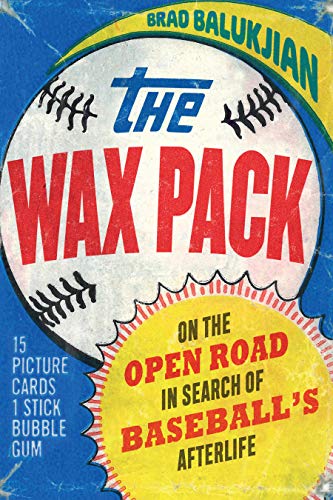
George Plimpton once famously wrote, “The smaller the ball used in the sport, the better the writing.” Golf writers love this, but baseball isn’t far behind. If you’re looking for a good baseball book to pass the time during this particularly slow and hot summer, I’ve got two to endorse: The Wax Pack by Brad Balukjian and The Cactus League by Emily Nemmns.

Balukjian’s book has one of the best devices I’ve ever come across in sportswriting: he opens a pack of Topps baseball cards from 1986, then sets off on a road trip to find every player contained in the pack. Nemens’ book is fiction, set in spring training, ostensibly about one All Star player’s struggles, but told through a series of convergent character stories. Different, yes, but both books capture much about what makes the game such a powerful metaphor for life: the passage of time, the pursuit of greatness, the acceptance of mundanity, relationships of all sorts, the convergence of the personal with the universal. Balukjian’s narrative is excellent, his moments of serendipity border on fantasy (but are all real); Nemens’ story is equally great, her characters wonderfully developed (even if they don’t appear for too long), her baseball world is achingly familiar (even though it’s not real). Both are certainly treats for the baseball folks, but I think they are both good enough to satisfy those of us who can’t bear the thought of sitting through 9 innings.

Both books should be pretty easy to track down, but maybe you’ll consider supporting an independent bookstore via Indiebound? Like the national pastime, these stores are part of us, and it would be great to help them navigate the economic downturn.

Why Are We Against Doping? (Part I)

Photo by freestocks on Unsplash

Like many of you, I recently watched the excellent ESPN documentary on Lance Armstrong. Even if you are familiar with the story, it’s a well put-together and compelling documentary, well worth the watch. In discussing the film with family and friends, we inevitably would drill down to the heart of the matter: what exactly is wrong with doping? Most sports fans are anti-doping, but why? We seldom dig deep and try to unpack this belief, so I’ll do my best to do just that, with some efficiency. Before getting started, I’ll note that there is a ton of great academic writing on the ethical issues surrounding doping. My take here draws on a lot of this material, but especially the work of the late Robert Simon, whose book Fair Play has been a mainstay in my ethics courses.

So let’s start with the easy argument: doping is cheating and cheating harms sport. This one is pretty straightforward, but it might require a definition of cheating. Let’s go with the philosopher Bernard Gert, who offers this: cheating is best identified with the intentional violation of a public system of rules to secure the goals of that system for oneself or for those for whom one is concerned. The intent and the “public system of rules” are critical here. If athletes acknowledge a set rules saying that they won’t dope, and then they do, they are cheaters. For many folks, case closed.

But this analysis of cheating doesn’t get us any closer to resolving specific concerns about doping. So now let’s look at five of the most common, mainstream arguments against doping. They aren’t the only ones, but they are the biggies. And they seem to fall apart pretty quickly when put through the ethical/logical ringer.

  1. Doping is not natural. This one gets quickly exhausting. Where do we draw the “natural” line? We’re ok with Advil, protein powder, and LASIK surgery, none of which are particularly natural. The list could go on: hyperbaric chambers, preemptive surgery, vitamin pills, etc. Trying to draw the “natural” line is futile; we could reasonably argue that human growth hormone is, in fact, natural.

  2. Doping harms the athlete. Some doping regimens certainly do, but is that a fair concern? Some sports harm the athlete by design: we are ok with boxers getting punched in the head and the health risks of football, but not ok with the risk of doping? Even if we look at non-violent sports, it is far from clear that we don’t endorse practices that are “unhealthy”: the weight training, conditioning, and dietary regimens of elite athletes go far beyond what is required for healthy living; some of these regimens carry their own risks. There’s also the element of paternalism: do we have the right to tell free-thinking, adult athletes what risks they can or cannot take? “You may push yourself to unhealthy extremes training for a sport and that sport itself may cause devastating, life-long injuries, but you may not take these substances, because they may hurt you.” The argument feels flat when we express it that way.

  3. Doping creates an un-level playing field. This is likely true, but do we actually want the level playing field, or is it a foundational myth of sport that we buy into? For most fans, there are exactly 2 teams whom we want to see win: our own team, and if they aren’t playing, the underdog. The underdog narrative, arguably one of the very best parts of sport, is so compelling because the playing field isn’t level. We LOVE seeing a cash-strapped soccer team upset Manchester City or PSG, just as we love when the disadvantaged high school team triumphs over a rich school. Furthermore, we don’t exactly try to level playing field in non-doping terms: we don’t expect the rich high school to subsidize their poor opponent, we don’t put limits on how much a team or athlete can train based on their opposition’s resources, we don’t give sprinters a head start against Usain Bolt.

  4. Doping is coercive; when an athlete dopes, he forces other athletes do the same. This one is pretty compelling and explains why many of us can sympathize with athletes who dope, our thinking usually goes like this: if I had to break the rules to stay competitive in my livelihood, especially if other people are breaking the rules, I’d probably do the same. But understanding the motivation the dope isn’t the same as a logical justification. And words must mean something: coercion requires…well, coercion. And it’s unclear that the pressure to dope is the same as being forcibly coerced into doing so. We still have free will and agency, thus ultimately the final choice in whether or not we dope. Even if choosing the ethically sound route hurts our career, we have the choice. To be clear, we must distinguish true coercion from a general sense of pressure: the East German female swimmers of the 1970s/80s were coerced, fed steroids by their team doctors as part of their “vitamins.” This was a human rights violation. These athletes did not have a choice and we must consider them differently than the athlete who felt that they did not have a choice.

  5. Doping athletes may influence kids to dope. They certainly might and this is not desirable. But is this sufficient reason to ban doping? Parents who smoke and drink may influence their kids to smoke or drink; many of us celebrate musicians and artists who openly use drugs, without concern about their influence on youth.

So where does this leave us (for now)? You may find some of my counter-arguments more convincing then others. However, taken one by one, each of the five traditional arguments against doping begin to weaken under the pressure of ethical/logical consistency and scrutiny. One possible way out of this is to take a utilitarian approach: while no single argument may be wholly compelling, when combined they add up to a holistically compelling anti-doping position, where the positives of anti-doping policy and ideology outweigh the negatives. Indeed, this seems to largely be the basis for our current state of anti-doping affairs. Of course, there is also the obvious economic motivation for organizations to prohibit doping, if only for the incumbent implications for marketing and public relations. Organizations want to keep sports clean because fans prefer a sports world that is clean (or at least says it is, or tries to be). This may come across as a less-than-altruistic motive, but that doesn’t undermine the utilitarian perspective, assuming that the result is a sports world that produces net pleasure for the greatest number of people.

In part 2 of this post, I return to the idea of cheating, explore the pro-doping perspective, and attempt to resolve this mess a bit more.

Reminder: Pay Attention to the Ivies

Photo by Paweล‚ Czerwiล„ski on Unsplash

This guest post comes our way from Alec Hurley, a PhD candidate at the University of Texas at Austin. Alec previously wrote about religion and football for SportsThink.

Despite being an athletic afterthought for most of the last century, the Ivy League continues to hold significant influence in the world of collegiate athletics.  Less than a week ago, the league comprised of institutions known more for their off-field accomplishments, became the first Division 1 conference to officially cancel all fall athletics.  Taking the boldest measure first, the Ivy Leagueโ€™s decisions allowed the more athletically dominant conferences of the Big10 and Pac12 to announce a restricted set of athletic plans several days later.  This begs the question, why arenโ€™t sport management students at Power-5 universities exposed to the Ivy League athletics model?

The pattern of the Power-5 conferences (Pac12, Big10, SEC, ACC, and Big12) delaying action until after the Ivy League moves, has been thrust into the spotlight thanks to the global โ€“ though increasingly US-centric โ€“ pandemic.  Over the last five years I have sat in sport management classrooms as a graduate student and as a TA.  Those classrooms all resided in institutions within Power-5; Pac12 and Big12 respectively.  Students, both in my graduate cohort and the undergraduates I currently teach, routinely overlook the Ivy League when dealing with examples of intercollegiate athletics.  Regardless of the topic, budgeting, sociology, or ethics, the focus is nearly unanimously on the Power-5 conferences.  Recent trends in decision-making during times of crisis show that this oversight might be costly.

There are two specific lessons sport managers (students and professionals alike) can glean from the actions of the Ivy League over the last six months.  The first is decisiveness.  While patience remains a virtue, time sensitive crises โ€“ in the present case, one literally of life and death โ€“ require swift and unyielding action.  In March, the NCAA dragged its feet attempting to continue its absurdly lucrative March Madness basketball tournament.  The first conference to prematurely end its tournament, the Ivy League, did so two days prior and with full refunds.  Over the summer the Ivy League again acted purposefully by cancelling all fall athletics, even though coronavirus cases and deaths are decreasing in the northeast, where the league is located.  Yet universities and conference leaders in the most infected parts of the country continue to waver on the feasibility of live play in the Fall.

This brings us to the second lesson sport managers should learn from the Ivy League, the role and value of collegiate athletics as a part of the college experience.  Missions statements from athletic departments are rife with statements about caring for student-athlete well-being.  The current crisis exposed how hollow those sentiments are.  From the tone-deaf press-conferences of college football coaches to Power-5 teams losing up to a third of their roster due to quarantine after less than a week of summer practices, it is unclear just how seriously the well-being of student-athletes is being considered.  The Ivy League, by contrast, values athletics as a part of the fabric of the university rather than as the driving force behind enrollment and other financial acquisitions.  As such, the Ivies are better positioned to cope with the potential losses of athletics better than universities who rely on big-time college sports.  It is worth considering for our sport management courses, which model we should be teaching the next generation of leaders.

Friday LinkThink

Current goings-on and other interesting things.

  1. What will the Ivy League’s fall sports decision mean for college football?
  2. A W.N.B.A. Owner Clashes With Players on Protests
  3. Big Ten Will Play Fall Sports Only Within Conference, if at All
  4. Stanford Permanently Cuts 11 Sports Amid Coronavirus Pandemic
  5. Scrabbleย players move toward banning 200+ slurs from tournament play (kinda surprised many of these were allowed, but can’t say I know much about Scrabble tournaments)
  6. Questions emerge about sports draining public resources

The Washington NFL Team Gets a New Identity. Finally

It took long enough, but it looks like it’s finally happening: the Washington, DC NFL franchise is abandoning its racist name and visual identity. This is a good thing and long overdue. Pressure to ditch the slur/name has been mounting for decades, but the team and Dan Snyder, their notoriously unlikeable owner, have long resisted, even trotting out dubious surveys to claim that “hey look, Native Americans are OK with this!”

Movements to change Native/Indigenous mascots have gained steam in recent years, especially at the scholastic and intercollegiate level, both in the US and Canada. Of course, there are critics, who claim that such imagery honors Indigenous peoples and that changing names and mascots is just another manifestation of over-reaching political correctness. To these critics I say: nope, move along. Native imagery in sports and popular culture has very real consequences for Native/Indigenous youth, the most vulnerable population of our most vulnerable minority group. Here’s the abstract from a paper compiling four research studies, led by Stephane Fryberg, currently at the University of Michigan:

Four studies examined the consequences of American Indian mascots and other prevalent representations of American Indians on aspects of the self-concept for American Indian students. When exposed to Chief Wahoo, Chief Illinwek, Pocahontas, or other common American Indian images, American Indian students generated positive associations (Study 1, high school) but reported depressed state self-esteem (Study 2, high school), and community worth (Study 3, high school), and fewer achievement-related possible selves (Study 4, college). We suggest that American Indian mascots are harmful because they remind American Indians of the limited ways others see them and, in this way, constrain how they can see themselves.

full article here.

We can complement this research with some common sense: social enterprises shouldn’t have racist names, mascots, or imagery. Simple enough. American pro sports organizations aren’t traditional “firms”, with mere fiduciary duties to shareholders. They are the beneficiaries of public monies for stadium construction projects, a variety of special legal dispensations at the state and federal levels, and built their empires via generous deals with a publicly regulated broadcast system. On top of tall that, they are vastly influential, especially to our youth. Maybe they shouldn’t be, but they are.


Some related notes:

  • The Cleveland Indians also seem to be moving toward a name change. The Atlanta Braves say they won’t change their name, but are revisiting the use of Native tropes, such as the Tomahawk Chop. The Chicago Blackhawks say they won’t change their name.
  • The NCAA banned Native mascots 15 years ago, but a handful of special exemptions have been granted. Things get murky here, as some schools essentially buy tribal endorsements, as is the case of the University of Utah (the Utes) and Florida State University (the Seminoles).
  • For a great read on this complex subject, check out: Billings and Black, Mascot Nation: The Controversy over Native American Representations in Sports

The Risks of Putting Our Faith in Sports

We often like to put the sports world on a pedestal, pointing to they ways in which sports lead the way in social change. Perhaps most famous is the story of Jackie Robinson and the integration of MLB, which came well before the peak of the larger Civil Rights Movement. When the history of our current era is written, I expect that the protest movement launched by Colin Kaepernick will be framed as a critical juncture.

A few months ago, it felt like many of us began taking Covid more seriously in the wake of Rudy Gobert’s positive test and the mid-game stoppage of the NBA season. If healthy athletes were at risk, so were the rest of us. But perhaps our faith in sporting institutions can be misplaced: I fear that the steady march of professional sports leagues attempts to resume play instilled a false sense of confidence in the public at large. If it could be safe to play, then it must be safe for the rest of us to resume life as usual. Today, with the virus raging across the country, it’s clear that many of us were too quick to restart. And with a slew of positive tests emerging from across the sports world, it looks like the leagues were pushing too hard as well. If these leagues, with their near-infinite resources, can’t contain this thing, what does that mean for the rest of us? The leagues are still pushing forward, but maybe they shouldn’t be.

We long for the return of games as a symbol of a larger return to normalcy, but there has been nothing normal about the structures put into place for safe return to play. And those structures aren’t working. I understand the myriad motivations for the return to play, but it pains me to say that we probably shouldn’t be, save for the precious few sports that can truly pull it off safely. Given their influential place in American society, the most ethical thing these organizations could have done was to press pause for the year and direct their resources to serving their communities. But it’s a business and I get it. My hope now shifts to transparency, that seeing the lengths leagues and teams have to go to approach safe operations offers lessons to the rest of us about how seriously we should be taking things. I hope that the truncated seasons go off without any major catastrophe and I hope that we learn from their struggles as much as we enjoy their programming.